Capabilities

Cognitive emotional Artificial Intelligence.

ANIXAI sits above existing AI models and contributes the parts they lack: logic, memory, verification with I/O emotionally informed priorities.
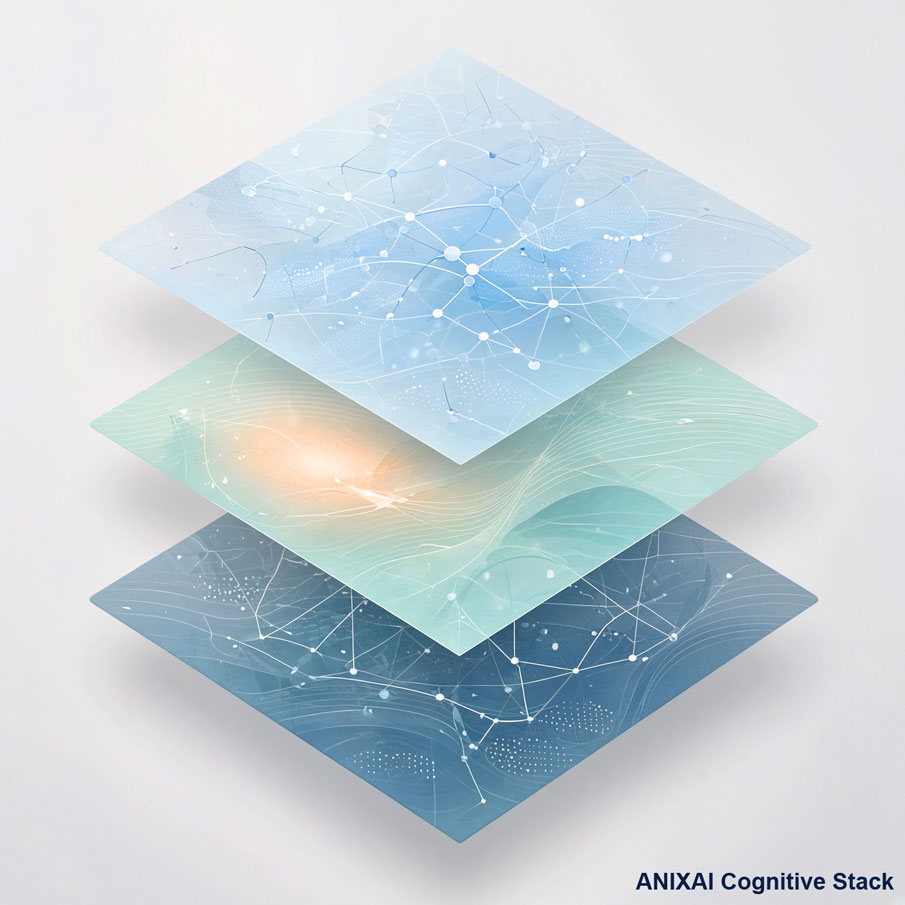
Abstract illustration of translucent stacked planes representing layered cognitive processing

01 · Architecture

Core design

A three-layer cognitive stack

Signals are acquired, synthesized against memory and then shaped by neurotransmitter emulation before a decision is reasoned out.

  • Acquisition: Immediate acquisition of temporal and micro-emotional input signals: timing, phrasing, shifts in tone and the small cues that a token stream flattens (fractals supported).
  • Synthesis: Integrates those signals with contextual memory and historical comparisons, so the present moment is read against what came before.
  • Neurotransmitter emulation: The primary layer. Emulated neuromodulators shape reasoned decisions and processing priorities rather than merely attaching emotion labels.
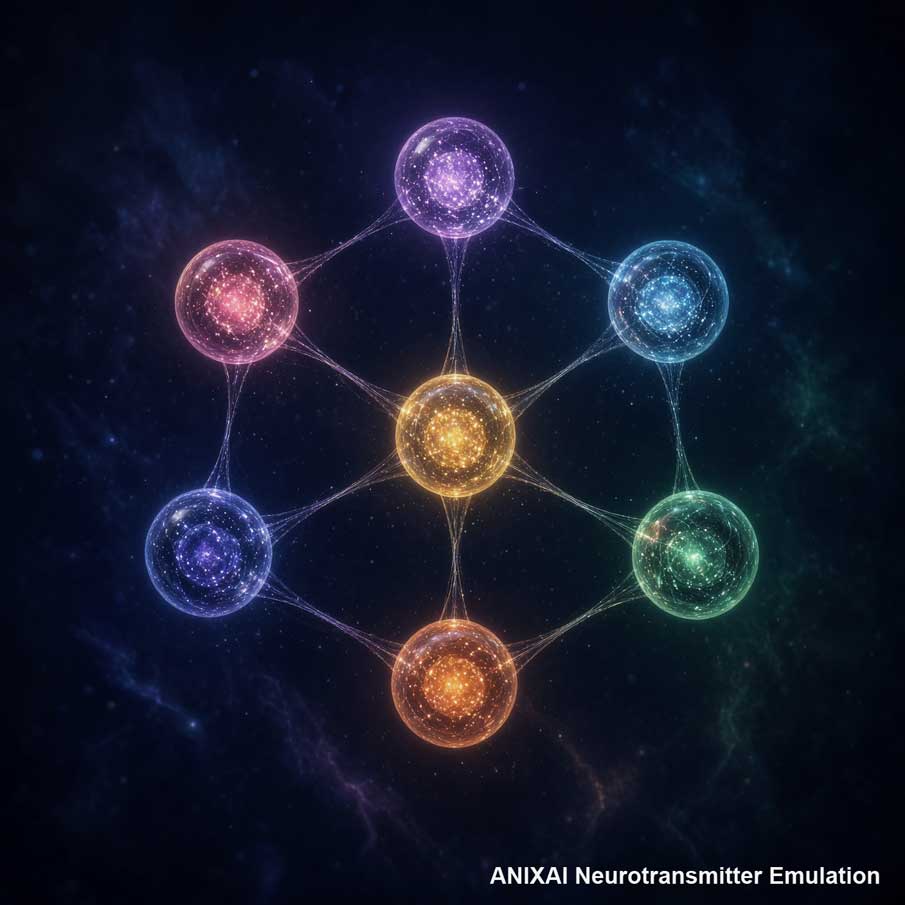
Abstract constellation of seven connected nodes representing emulated neurotransmitters

02 · Emotional context

Core design

Neurotransmitter emulation

Seven emulated modulators influence processing priorities and reasoned decisions. ANIXAI emulates functional roles; it does not claim consciousness or human feelings.

  • Dopamine - Curiosity, reward, exploration
  • Serotonin - Stability, confidence
  • Norepinephrine - Alertness, priority
  • Glutamate - Learning, associative activation
  • Oxytocin - Trust, relational continuity
  • Acetylcholine - Working memory, context switching
  • GABA - Inhibitory control, master regulator
Abstract concentric rings and strata representing persistent multi-level memory

03 · Memory and verification

Core design

Context that persists, answers that are checked

Multi-level temporal, semantic and emotional context is combined with multi-stage verification designed to reduce hallucinations. No system is error-free; verification lowers risk, it does not eliminate it.

  • Adaptive modelling of users, tasks and situations
  • Temporal, semantic and emotional context layers
  • Self-directed knowledge refinement within ethical boundaries
  • Multi-stage verification to reduce hallucinations
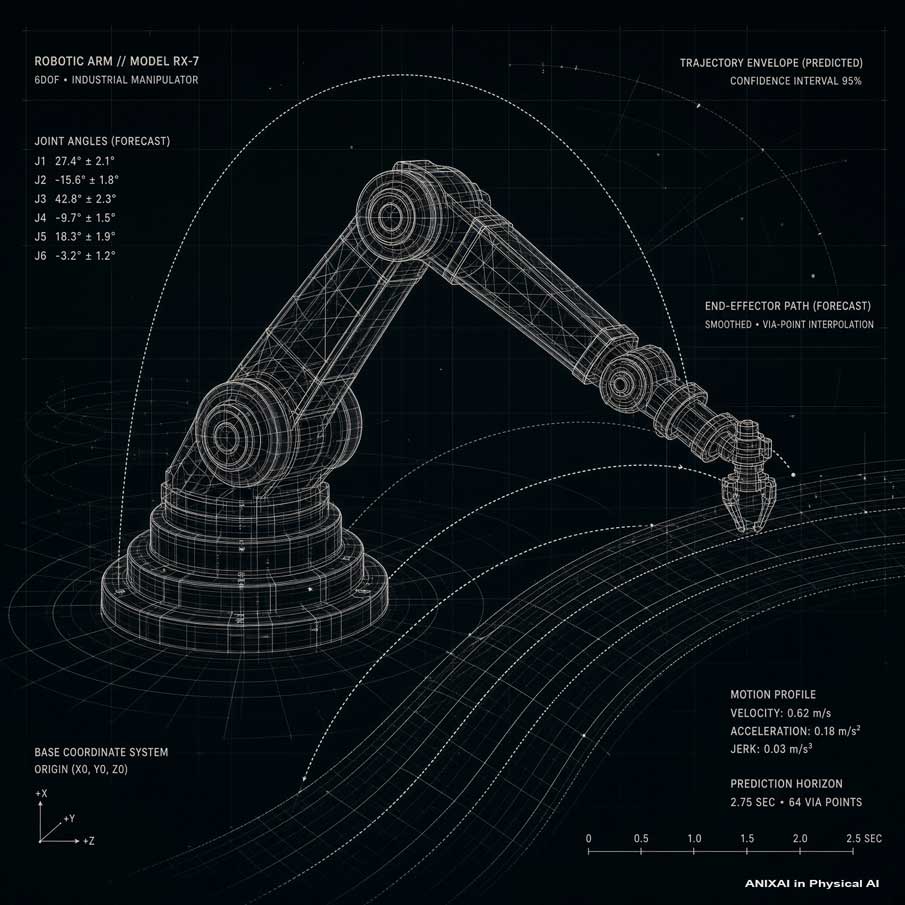
Abstract wireframe robotic arm with forecast trajectory arcs

04 · Applications

Mixed: design and research

From workflows to physical AI

Situational awareness and workflow orchestration support enterprise and adaptive systems, while robotics and intention forecasting remain active research.

  • Enterprise workflow orchestration
  • Multimodal analysis
  • Conversational and adaptive systems
  • Robotics, physical AI and intention forecasting (research)

Available today versus research direction

We separate what ANIXAI is designed to do from what is still being explored. Nothing on this page is a guarantee of production availability.

Core architecture
Three-layer stack, neurotransmitter emulation, contextual memory, verification, ethical boundaries, AILOJZ runtime integration.
Research directions
Robotics and physical AI, intention forecasting, broader multimodal perception and self-directed refinement at scale.

Go deeper into the architecture.

Documentation is being published progressively. For collaboration or evaluation, contact GaletAI directly.